

Why Does My Neck Hurt? Common Causes of Neck Pain in Burnaby
Neck Pain Is More Common Than Ever
If you've ever woken up with a stiff neck, struggled to turn your head while driving, or felt constant tension across your shoulders, you're not alone.
Neck pain has become one of the most common complaints among adults in Burnaby. Between desk jobs, long commutes, smartphones, and physically demanding work, the modern lifestyle places significant stress on the cervical spine.
While many people assume neck pain is simply something they have to live with, persistent symptoms are often a sign that an underlying problem has developed within the joints, discs, muscles, or nerves of the neck.
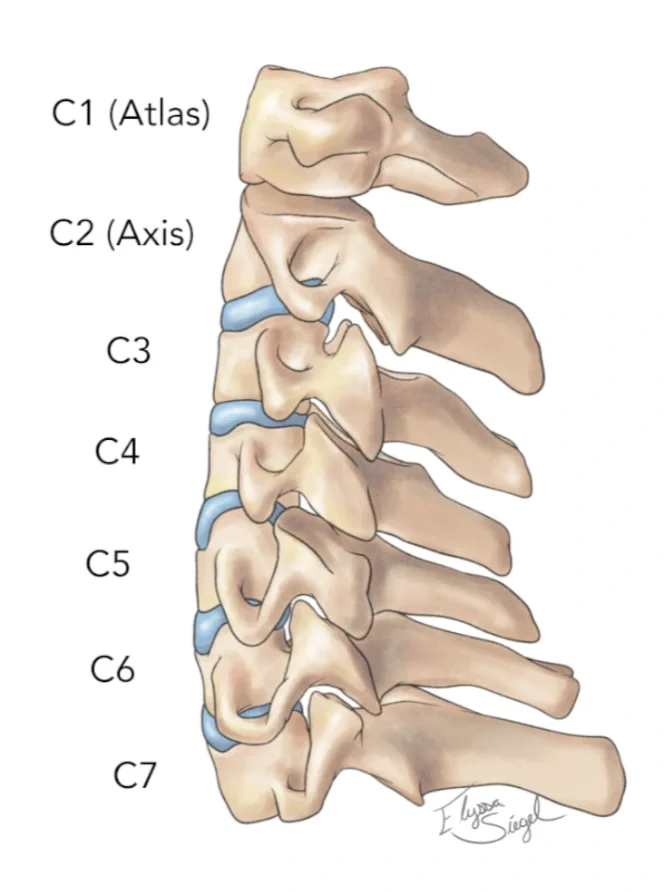
Cervical Spine Anatomy
Understanding the Cervical Spine
Your neck, also known as the cervical spine, consists of seven vertebrae that support the weight of your head while allowing movement in multiple directions.
This region of the spine is responsible for:
Supporting the head
Protecting the spinal cord
Allowing rotation and movement
Providing pathways for nerves traveling into the shoulders, arms, and hands
Because the cervical spine is highly mobile, it is also more vulnerable to injury, stress, and mechanical dysfunction.
position for your neck!
The Most Common Causes of Neck Pain
1) Poor Posture and Tech Neck
One of the biggest contributors to neck pain today is prolonged forward head posture.
Looking down at phones, laptops, and tablets for hours each day places excessive stress on the cervical spine. As the head moves forward, the muscles and joints of the neck must work harder to support its weight.
Over time this can lead to:
Muscle tension
Joint irritation
Reduced mobility
Recurring stiffness
Headaches
Many people don't notice the effects immediately. Symptoms often develop gradually over months or years.
2) Spinal Misalignment
The spine functions best when each vertebra moves properly relative to the segments above and below it.
When a vertebra loses normal motion or alignment, surrounding tissues can become irritated. This may contribute to inflammation, muscle guarding, restricted movement, and discomfort.
In many cases, the pain people feel is not the actual problem itself but rather the result of ongoing stress being placed on the surrounding structures.
3) Previous Injuries
Neck injuries don't always cause immediate symptoms.
Motor vehicle accidents, sports injuries, slips, falls, and workplace incidents can create mechanical changes within the cervical spine that remain long after the initial injury appears to have healed.
Years later, patients may begin experiencing stiffness, headaches, or recurring neck pain without realizing it may be connected to a previous injury.
4) Disc Problems
Between each vertebra sits a spinal disc that acts as a shock absorber.
When discs become injured or begin to degenerate, they can create inflammation and irritation within the spine. In some cases, disc bulges or herniations may place pressure on nearby nerve roots.
Symptoms can include:
Neck pain
Shoulder pain
Arm pain
Numbness or tingling
Weakness in the upper extremities
Why Neck Pain Often Keeps Coming Back
Many people focus solely on managing symptoms.
Heat, stretching, massage, pain medication, and temporary activity modification can sometimes provide short-term relief. However, if the underlying mechanical issue remains unchanged, symptoms often return.
This is one reason people frequently describe neck pain as something that "comes and goes" for years.
Identifying the source of the problem is often more important than simply chasing the symptoms.
The Connection Between Neck Pain and Headaches
Many headaches actually begin in the neck.
The upper cervical spine shares important neurological connections with structures involved in head and facial sensation. When irritation develops within the upper neck, pain can be referred into the head, resulting in what is known as a cervicogenic headache.
Common signs include:
Pain starting at the base of the skull
Headaches that worsen with neck movement
One-sided headaches
Neck stiffness accompanying headache symptoms
For some individuals, addressing the cervical spine becomes an important part of reducing headache frequency.
When Should You Have Your Neck Evaluated?
Occasional stiffness after a long day isn't unusual.
However, it may be worth seeking a professional evaluation if you experience:
Neck pain lasting more than a few weeks
Frequent headaches
Pain that radiates into the shoulder or arm
Numbness or tingling
Reduced range of motion
Recurring episodes of neck stiffness
Symptoms that interfere with work, sleep, or exercise
Early assessment can help determine whether the issue is related to posture, spinal mechanics, disc involvement, or nerve irritation.
Protecting Your Neck in Everyday Life
Simple habits can reduce unnecessary stress on the cervical spine:
Keep computer monitors at eye level
Take regular movement breaks throughout the day
Avoid prolonged phone use with your head bent forward
Maintain an active lifestyle
Strengthen postural muscles
Create an ergonomic workstation
Pay attention to sleeping positions and pillow support
Small improvements performed consistently often have a significant impact over time.
Neck Pain Care in Burnaby
At Adapt Spine Centre, we work with patients throughout Burnaby, Burnaby Heights, North Burnaby, and surrounding communities who are dealing with neck pain, headaches, posture-related problems, and spinal dysfunction.
Through detailed spinal analysis and a Gonstead approach to chiropractic care, our goal is to identify the underlying factors contributing to a patient's symptoms and develop a personalized plan based on their individual findings.
If neck pain is affecting your daily life, understanding what's causing it is often the first step toward lasting improvement.