


Scoliosis Care — Burnaby BC
Scoliosis Doesn't Have to Mean a Life of Pain and Limitation.
A curved spine creates uneven mechanical load across every joint, disc, and muscle in your body. At Adapt Spine Centre in Burnaby, we use the Gonstead structural engineering approach to assess your scoliosis, reduce its effects, and protect your long-term spinal health.
3%
of the population has scoliosis — most are never properly assessed
Structural
Engineering-based Gonstead approach to spinal curve management
All Ages
Adolescent through adult scoliosis care
Understanding Scoliosis
What Scoliosis Is — and What It Does to Your Body Over Time
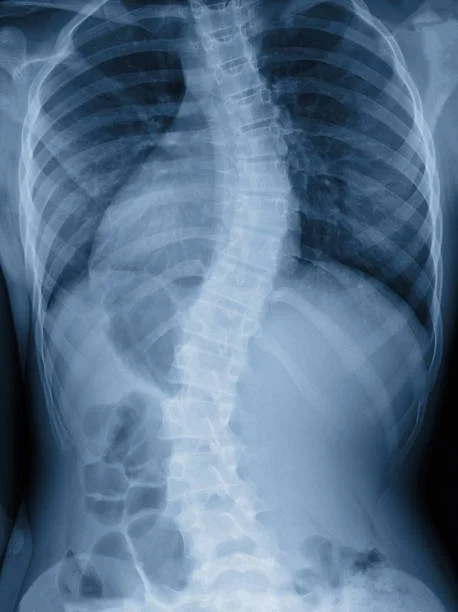
Scoliosis is a lateral curvature of the spine — measured in degrees using a Cobb angle on X-ray — that causes the spine to curve sideways and often rotate. The most common form is idiopathic adolescent scoliosis, which typically develops during growth spurts in children aged 10–18. Adults can also develop scoliosis through degenerative changes or as untreated adolescent curves progress with age.
The consequences of scoliosis are structural and progressive. The uneven loading caused by spinal curvature accelerates disc degeneration on the compressed side, causes muscle imbalances as the body compensates, and can affect nerve function when vertebral rotation creates foraminal narrowing. Chronic back pain, hip imbalance, rib prominence, and fatigue from constant muscular compensation are all common experiences for people living with scoliosis.
While severe structural scoliosis may require surgical or bracing intervention, the vast majority of patients — particularly those with mild to moderate curves — benefit significantly from specific chiropractic care that addresses the vertebral mechanics within the curve and manages the secondary consequences of living with an asymmetric spine.
Uneven shoulders or hips — one visibly higher than the other
Chronic one-sided back pain from uneven disc and joint loading
Rib prominence or waist asymmetry visible when bending forward
Muscle fatigue and tightness on one side of the back or neck
Radiating pain or numbness from nerve compression within the curve

The Gonstead Approach to Scoliosis
Structural Engineering Principles Applied to Your Curved Spine
The Gonstead system was developed from a structural engineering model of the spine — making it uniquely suited to the complex mechanical challenges of scoliosis. Rather than generically manipulating the spine, our approach uses precise radiographic analysis to identify the specific vertebral levels within the curve that can be safely and effectively adjusted, along with the compensatory regions creating secondary dysfunction.
Cobb Angle X-Ray Analysis
We take weight-bearing spinal X-rays and perform a full Cobb angle measurement — establishing your curve's degree, location, and rotational component. This is your baseline. We track it to measure real structural change over time, not just symptom relief.
Targeted Vertebral Corrections
Within a scoliotic curve, specific vertebrae are misaligned in precise directions. Gonstead adjustments target these levels specifically — reducing the rotational and lateral forces that perpetuate the curve and causing the secondary muscle imbalances that drive pain.

Progression Management
Our goal is to slow or halt curve progression, manage the mechanical consequences of your existing curve, and maintain your quality of life. For adolescent scoliosis, early intervention during growth phases has the greatest impact on long-term outcomes.
Common Questions
Scoliosis FAQs
Can chiropractic care straighten a curved spine?
Chiropractic care is not a cure for structural scoliosis, and we will never promise otherwise. However, research shows that specific chiropractic adjustments can reduce Cobb angle measurements in some patients, significantly relieve the back pain associated with scoliosis, improve posture, and slow the rate of curve progression — particularly in younger patients. Our goal is to give your spine the best mechanical environment possible and manage the quality-of-life consequences of your curve.
My child was diagnosed with scoliosis at school — when should they see a chiropractor?
As soon as possible after diagnosis. During adolescent growth phases, curves can progress rapidly. Early chiropractic assessment establishes a baseline X-ray record and allows us to begin care during the window when intervention has the greatest potential impact. We see patients as young as 10 for scoliosis management in Burnaby.
I'm an adult who was told I have scoliosis years ago but never treated it — is it too late to benefit?
It's never too late to benefit from proper spinal care. Adult scoliosis management focuses on managing pain, maintaining mobility, slowing degenerative changes, and improving quality of life. Even with a long-standing curve, most adult scoliosis patients experience meaningful relief from the back pain, muscle fatigue, and secondary symptoms that accumulate over
Related Conditions
Scoliosis often creates secondary conditions. You may also find these pages helpful:

Your Scoliosis Deserves a Precise, Honest Assessment.
Book your initial exam at Adapt Spine Centre in Burnaby. We'll take weight-bearing X-rays, measure your curve, and give you a clear, honest picture of how Gonstead care can help — and what it cannot.
Located at 3961 Hastings Street #101, Burnaby BC · Open Mon–Sat · No referral required