

Disc Injuries Explained: Causes, Symptoms, and Treatment Options in Burnaby
Disc injuries are one of the most common causes of lower back pain, neck pain, and radiating symptoms into the arms or legs. Whether you've been told you have a bulging disc, herniated disc, or degenerative disc changes, understanding how spinal discs function can help you better understand your symptoms and recovery options.
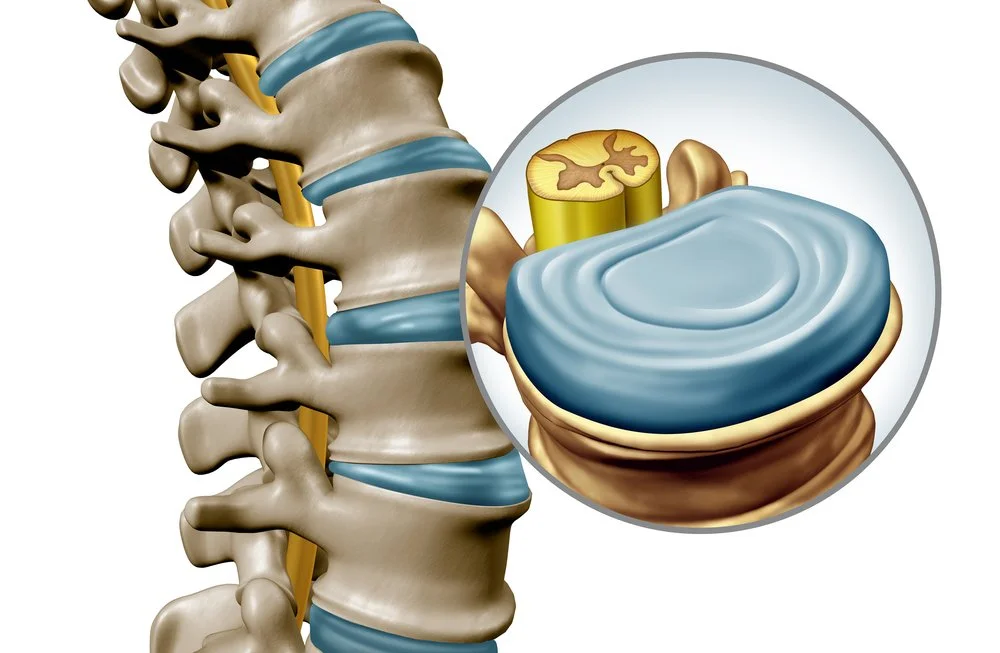
Spinal Disc Anatomy
What Are Spinal Discs?
Spinal discs are the cushions that sit between the vertebrae of your spine. They act as shock absorbers, helping the spine handle everyday forces from walking, lifting, bending, and movement.
Healthy discs allow the spine to move properly while helping distribute pressure evenly throughout the spinal column. When a disc becomes damaged or stressed, it can affect nearby joints, muscles, and nerves.
Common Signs of a Disc Problem
Disc injuries don't always cause pain directly at the site of the injury. In many cases, symptoms occur when the affected disc begins irritating nearby nerve structures.
Common symptoms may include:
Persistent low back or neck pain
Pain that travels into the arm or leg
Numbness or tingling in the extremities
Muscle weakness
Pain that worsens with sitting, bending, or lifting
Stiffness and reduced spinal mobility
The location of symptoms often depends on which disc is involved and whether nearby nerves are being affected.
How Do Disc Injuries Develop?
While some disc injuries occur suddenly after an accident or lifting injury, many develop gradually over time.
Factors that may contribute include:
Repetitive poor posture
Previous spinal injuries
Prolonged sitting
Repetitive bending or lifting
Chronic spinal stress and imbalance
In many cases, the disc has been under stress for months or years before symptoms become noticeable.
Why Disc Problems Can Cause Pain Far From the Spine
Many patients are surprised when a disc issue in the lower back creates symptoms in the leg, or when a neck disc problem causes symptoms in the shoulder or arm.
This happens because spinal nerves travel from the spine to other parts of the body. When a disc places pressure on or irritates a nerve root, symptoms can be felt anywhere along that nerve's pathway.
As a result, the location of your pain isn't always the location of the actual problem.
Chiropractic Care for Disc Problems in Burnaby
At Adapt Spine Centre, our focus is on identifying the spinal dysfunction contributing to abnormal stress on the affected disc.
Using the Gonstead System, we perform a detailed evaluation that may include:
Digital X-rays
Postural assessment
Motion palpation
Neurological testing
Instrumentation analysis
This thorough examination helps determine which spinal segments are functioning improperly and whether they may be contributing to disc-related symptoms.
Once the source of dysfunction has been identified, precise chiropractic adjustments are used to improve spinal mechanics and reduce stress on the affected area.