

TMJ & Jaw Pain: Could Your Neck Be Contributing to the Problem?
Jaw pain, clicking, popping, tension, and difficulty opening your mouth can all be frustrating symptoms of temporomandibular joint disorder (TMD). While treatment often focuses directly on the jaw, there is another area that may play an important role: the upper cervical spine.
At Adapt Spine Centre in Burnaby, we look beyond the jaw itself to assess the relationship between the upper cervical spine and TMJ function. The upper cervical vertebrae, particularly C1, C2, and C3, have important neurological, muscular, and postural connections with the jaw.
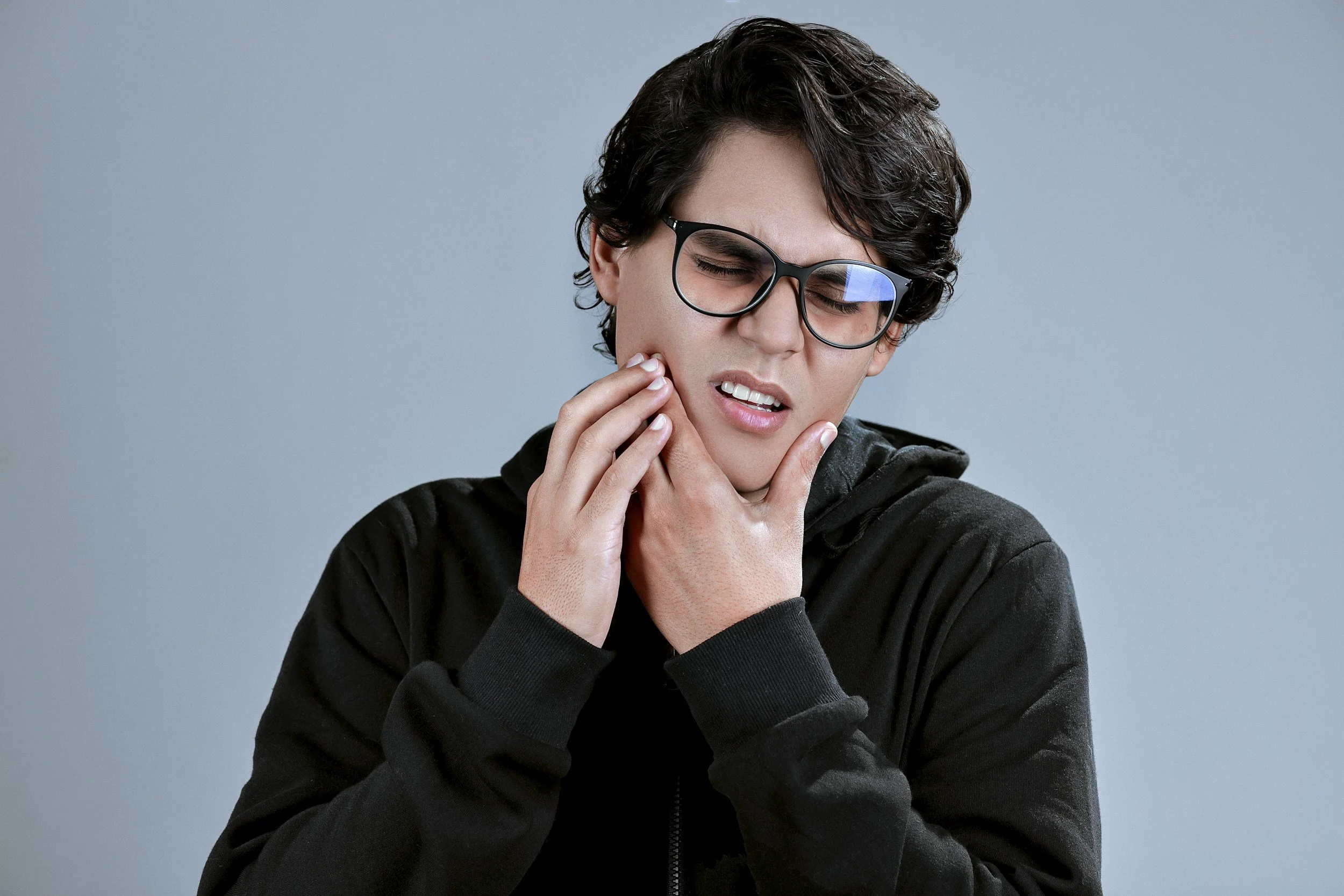
What Is TMJ Disorder?
The temporomandibular joint connects the jaw to the skull and allows you to open and close your mouth, chew, and move your jaw.
When this area isn't functioning properly, you may experience symptoms such as:
Jaw pain, clicking, or popping
Difficulty fully opening or closing your mouth
Jaw locking
Facial pain or tension
Tension around the masseter and temple regions
Ear fullness, ringing, or pain
Headaches that occur alongside jaw tension
Increased jaw clenching or grinding, particularly at night
These symptoms can make everyday activities like eating and talking uncomfortable.
The Connection Between Your Neck and Jaw
The upper cervical spine and TMJ have a close neurological relationship.
The trigeminal nerve controls the muscles responsible for jaw movement. It also converges with the upper cervical nerve roots at an area of the brainstem called the trigeminal cervical complex.
Because of this connection, misalignment in the upper cervical spine, particularly around C1, C2, and C3, can contribute to increased sensitivity in this shared neurological pathway. This may increase muscle tension around the jaw, affect jaw mechanics, and contribute to ongoing TMD.
Your posture can also play a role.
Forward head posture caused by cervical misalignment can change the resting position of the mandible. As the head moves forward, the jaw is forced backward relative to its ideal position. This can create abnormal forces through the TMJ and increase activity in the masseter and pterygoid muscles involved in clenching and grinding.
Why Address the Upper Cervical Spine?
If the upper cervical spine is contributing to your jaw dysfunction, focusing exclusively on the jaw may not address the structural factors contributing to the problem.
This is why our approach to TMD at Adapt Spine Centre begins with an assessment of the upper cervical spine.
Using the Gonstead approach, we assess the cervical spine for specific misalignments that may be contributing to neurological irritation, muscle tension, and postural changes affecting the jaw.
Upper Cervical X-Ray Assessment
Precise upper cervical X-rays are used to assess the alignment of the atlas (C1) and axis (C2). These vertebrae are closely connected to the neurological pathways involved in jaw muscle tension and TMJ function.
Atlas & Axis Correction
Specific Gonstead adjustments at C1 and C2 are used to address cervical misalignments. The goal is to reduce neurological irritation and allow excessive jaw muscle tension to resolve while supporting a more balanced resting position of the mandible.
Postural & Jaw Habit Guidance
We also identify habits and postural patterns that may continue to contribute to TMD, including forward head posture and jaw clenching habits.
Specific guidance can help support the structural corrections made during care and help changes hold between visits.
Can Chiropractic Care Help With TMJ?
When the upper cervical spine is contributing to TMD, addressing this component may help reduce the neurological and postural factors affecting the jaw.
Many patients notice reduced jaw tension, less clenching, and easier mouth opening within the first few weeks of upper cervical Gonstead care. Some patients notice a reduction in jaw tension and clenching frequency within their first 2–4 visits.
How quickly someone improves depends on the severity of the cervical misalignment and the underlying jaw pathology.
Chiropractic and Dental Care Can Work Together
Seeing a chiropractor does not mean you should stop seeing your dentist for TMJ concerns.
Dental and chiropractic care can address different components of TMD. A dentist addresses the occlusal, or bite-related, and joint-level components, while chiropractic care focuses on the cervical neurological and postural component.
For many people, addressing both areas can provide a more comprehensive approach to their jaw dysfunction.
Looking for TMJ & Jaw Pain Relief in Burnaby?
If you're dealing with ongoing jaw pain, tension, clicking, popping, or clenching, the upper cervical spine may be an important part of the picture.
At Adapt Spine Centre in Burnaby, our Gonstead approach to TMJ begins by assessing the upper cervical spine and its relationship with the jaw. By addressing the structural component contributing to your symptoms, we aim to help restore better balance to the cervical spine and jaw.
Book your initial exam at Adapt Spine Centre to find out whether your upper cervical spine may be contributing to your TMJ symptoms.