

Vertigo & Dizziness Relief in Burnaby, BC: Could Your Upper Neck Be the Missing Piece?
Vertigo can be frustrating, especially when it keeps coming back and you still don't have a clear explanation for why it's happening.
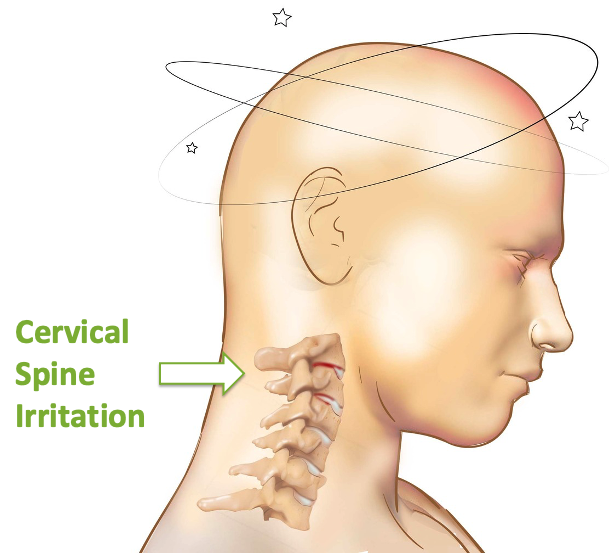
While many people associate dizziness and vertigo with the inner ear, the upper cervical spine can also play an important role in balance and dizziness. This is known as cervicogenic dizziness or cervical vertigo.
At Adapt Spine Centre in Burnaby, we assess the upper cervical spine to determine whether C1 and C2 may be contributing to your symptoms. Using the Gonstead method, we focus on precise assessment and specific upper cervical adjustments rather than simply masking symptoms.
What Is Cervicogenic Vertigo?
Cervicogenic vertigo refers to dizziness or balance problems that originate from the cervical spine.
The upper neck, particularly the atlas (C1) and axis (C2), contains a high concentration of proprioceptive nerve endings. These receptors constantly send information to the brain about the position of your head and neck.
Your brain combines these signals with information from your eyes and inner ear to help maintain your sense of balance.
When the upper cervical spine is misaligned, these signals can become distorted. This can create conflicting information within the brain's balance system, potentially resulting in:
Dizziness
Spinning or swaying sensations
Unsteadiness
Balance problems
Nausea
Visual disturbances
What Is Cervicogenic Vertigo?
Cervicogenic vertigo refers to dizziness or balance problems that originate from the cervical spine.
The upper neck, particularly the atlas (C1) and axis (C2), contains a high concentration of proprioceptive nerve endings. These receptors constantly send information to the brain about the position of your head and neck.
Your brain combines these signals with information from your eyes and inner ear to help maintain your sense of balance.
When the upper cervical spine is misaligned, these signals can become distorted. This can create conflicting information within the brain's balance system, potentially resulting in:
Dizziness
Spinning or swaying sensations
Unsteadiness
Balance problems
Nausea
Visual disturbances
Could Your Neck Be Contributing to Your Vertigo?
Cervicogenic dizziness is commonly associated with situations that affect the upper cervical spine, including whiplash injuries, concussions, and prolonged poor posture.
There are several clues that your neck may be contributing to your dizziness.
You may notice that your symptoms:
Get worse when you move your head or neck
Occur alongside neck pain or stiffness
Started after a car accident, whiplash injury, fall, or head trauma
Include a feeling of being "off balance," even when you're standing still
These patterns can indicate that the cervical spine should be investigated as part of your overall assessment.
Vertigo That Keeps Coming Back Shouldn't Be Ignored
When dizziness is investigated solely as an inner-ear problem, a cervical cause may be overlooked.
This can leave people searching for answers while continuing to experience recurring symptoms.
For example, inner-ear vertigo such as BPPV is typically associated with specific head positions and may respond to treatments such as Epley maneuvers. Cervicogenic dizziness, on the other hand, is more commonly associated with neck movement, neck pain or stiffness, and a history of whiplash or concussion.
At Adapt Spine Centre, the initial assessment includes testing to help differentiate between cervical and inner-ear origins.
How the Upper Cervical Spine Can Affect Balance
Your upper neck doesn't simply support your head. It also provides your brain with important information about where your head and neck are positioned.
C1 and C2 are particularly important because of the large number of proprioceptive receptors in this region.
If these signals become distorted by an upper cervical misalignment, the brain may receive conflicting information from the neck, eyes, and inner ear.
This can contribute to the sensation of:
Spinning. Swaying. Dizziness. Unsteadiness.
Correcting the underlying cervical misalignment may help normalize these proprioceptive signals and improve the balance information being sent to the brain.
The Gonstead Approach to Cervical Vertigo
At Adapt Spine Centre, we use the Gonstead system to assess and correct spinal misalignments.
When working with the upper cervical spine, precision is especially important. The atlas sits at the junction of the brainstem and spinal cord, which is why upper cervical care should be based on a thorough assessment rather than generalized neck manipulation.
Upper Cervical X-Ray Analysis
Precise upper cervical X-rays are used to measure the position of the atlas relative to the occiput and axis.
This provides directional information that helps determine how an atlas correction should be performed.
Specific Atlas Correction
Gonstead atlas adjustments are designed to be specific, low-force, and directionally precise.
Rather than generically "cracking" the neck, each adjustment is based on the findings from the examination and X-ray analysis.
Tracking Changes in Balance and Symptoms
As care progresses, changes in balance and symptoms can be monitored to determine how you are responding.
The goal is to address the structural component contributing to your symptoms rather than simply suppressing them.
Investigating the Source of Your Dizziness in Burnaby
Recurring vertigo can have more than one potential cause. While the inner ear is an important part of the balance system, the upper cervical spine can also influence the information your brain uses to maintain balance.
If your dizziness is associated with neck pain, stiffness, neck movement, or a previous whiplash or concussion, an upper cervical assessment may provide another piece of the puzzle.
At Adapt Spine Centre in Burnaby, BC, we use the Gonstead method to assess the upper cervical spine and provide precise, specific corrections when indicated.
Don't just keep treating the symptoms. Find out whether your neck could be part of the problem.